Wisconsin Point Visitor Use Assessment Update
Update provided by Molly Wick, Wisconsin Department of Natural Resources
The Wisconsin Point Visitor Use Assessment is an effort to better understand how people use and enjoy Wisconsin Point. You can read the full report on the City of Superior’s website here.
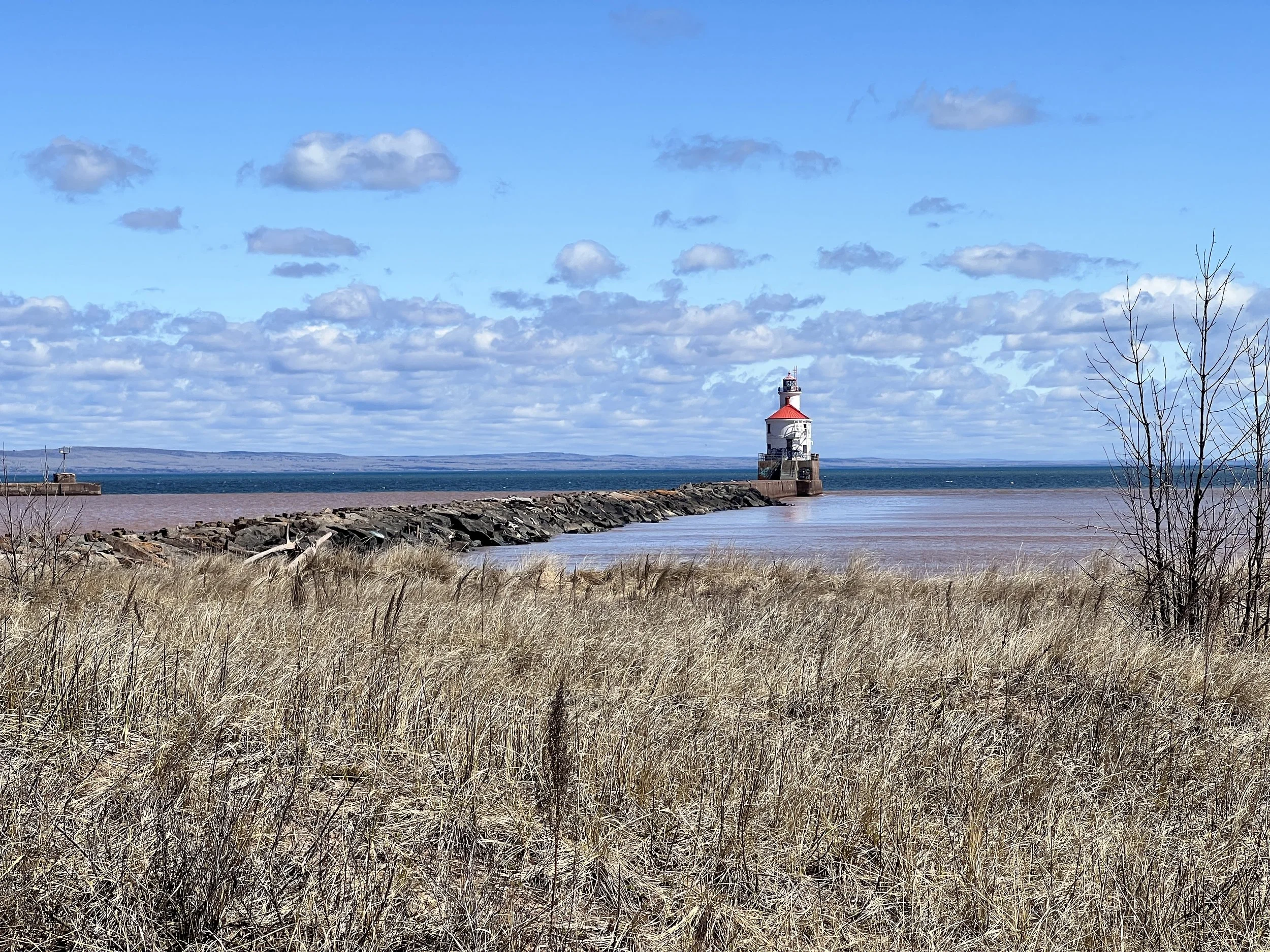
Lighthouse on Wisconsin Point.
The project collected survey data throughout 2025, and data analysis has recently been completed. Thank you to everyone who took the time to fill out the 15 minute survey and share their experiences with Wisconsin Point!
The results will help inform the Wisconsin Point Resiliency Study and guide future decisions aimed at protecting the Point’s natural character, cultural significance, and public access for years to come.
Below is a summary of what was found.
Respondents’ Relationships to Wisconsin Point
Most survey respondents (84%) reside within 50 miles of Wisconsin Point. Many (63%) were residents of Douglas County, and fewer (13%) were residents of Duluth, Minnesota. The most cited activities while visiting the Point were hiking and walking, beach combing, picnicking, ship-watching, and wildlife viewing. Many visitors reported participating in multiple activities when they visit the area. Respondents also shared activities that they are interested in trying in the future, including most commonly, snowshoeing, paddling, birding, skiing, and ice skating.
The survey asked participants about their relationship with Wisconsin Point. Results highlighted respondents’ deep, multi-generational connection to the Point and the area’s ecological, geological, and cultural significance. One respondent shared,
“Wisconsin Point is memories, past, present and future. It's a place for individuals and families to decompress, gather, and connect with what makes Superior superior. It's beauty. It's nature. It's ours. It's waves, storms, sun, sand and driftwood. It's grounding. It's humbling. It is powerful. It's a one-of-a-kind destination and it's OURS"
Native American respondents (likely primarily Ojibwe respondents, although specific ethnicity information was not collected) placed an emphasis on cultural, ancestral, and spiritual ties to the Point. Both Native American and non-Native American participants highlighted the importance of protection of and education about cultural sites like the Ojibwe Burial Grounds on Wisconsin Point.
Future Desires for Wisconsin Point
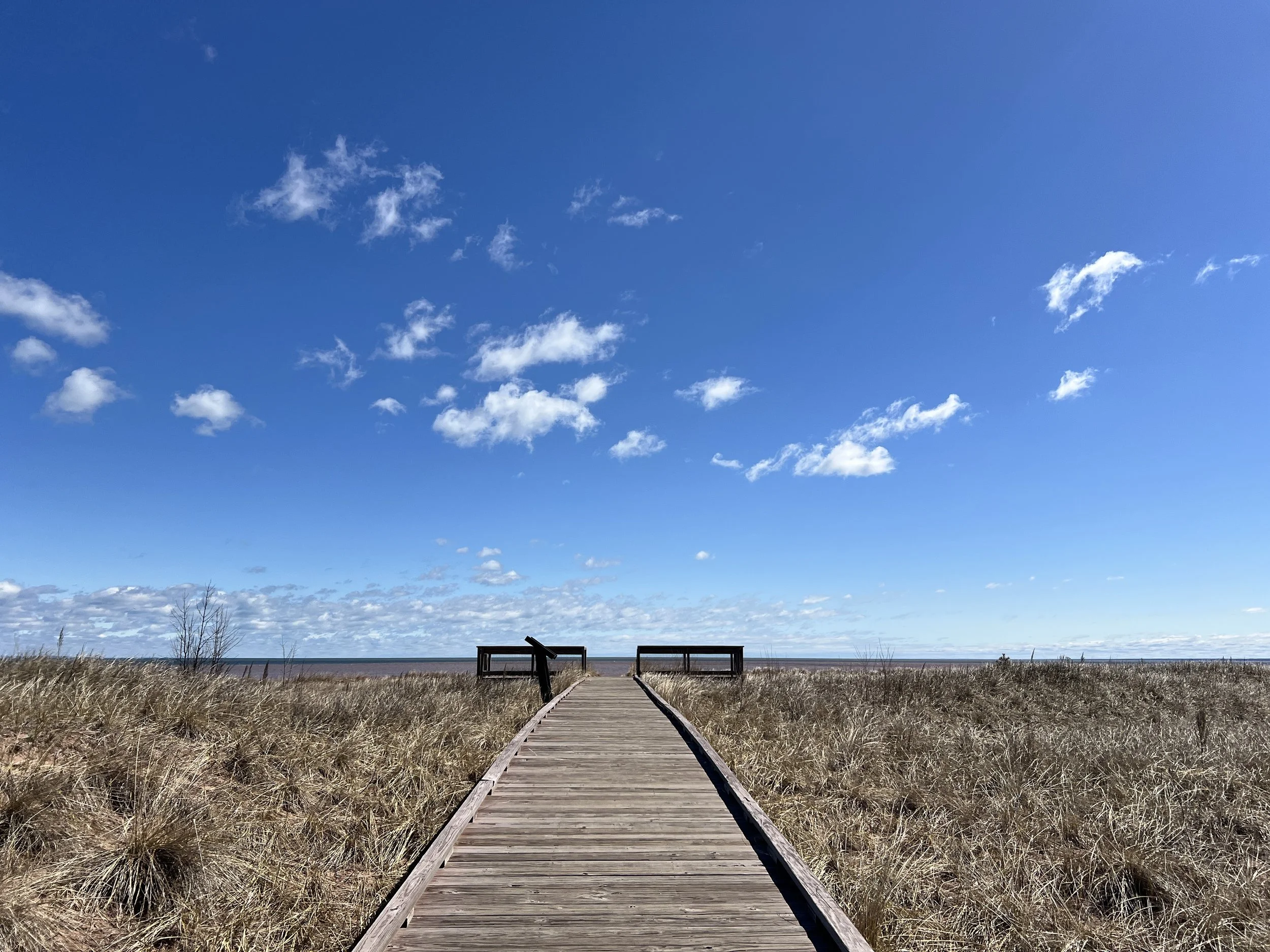
Boardwalk to the beach on Wisconsin Point.
The survey collected information about respondents’ desires for the Point in the future. Cleanliness and litter clean-up was ranked as the top priority, alongside protection of the Point and access to the water. Results highlighted both the desire to maintain the site’s wild, unmanaged character, while also improving facilities to support access for all. Respondents highlighted how the natural landscapes and ecosystems should be preserved and protected alongside cultural and historical heritage.
While resilience to extreme weather was the lowest ranked of the priorities given, respondents’ short answers highlighted concerns about impacts of extreme events to the Point. These concerns included impacts on infrastructure (e.g., boardwalks, parking lots), impacts to ecosystems (e.g., spread of invasive species and shifts in flora and fauna species), and erosion of the beach.
Respondents were largely opposed to development of the Point, preferring to protect its quiet solitude, while still maintaining free public access. Increased programming is of interest but should focus on community focused and low impact rather than large commercial events. Overall, results showed a strong consensus favoring protection and minimal development, with targeted improvements for accessibility, cultural interpretation, and habitat restoration.
How Results Will Be Used
The final Visitor Use Assessment report will include recommendations based on survey findings. Recommendations include ecological management considerations as well as recommendations for maintaining infrastructure, improving safety and security, and limiting future development to low-impact, nature-based infrastructure. Recommendations also include working closely with Tribal partners to steward the area and offer education about cultural heritage.
The results of this study will inform future updates to the Wisconsin Point Management Plan. In addition, WDNR is leading a separate study to explore options for improving resilience of Wisconsin Point to extreme events and climate change. Results of the Visitor Use Assessment will inform what management actions are evaluated and ultimately selected to help protect and preserve Wisconsin Point. Read more about the Wisconsin Point Resiliency Study here.
This project was led by the City of Superior with LegacyWorks Group and UW–Superior’s Center for Research and Evaluation Services. Funding was provided by the Great Lakes Restoration Initiative.
Dive Deeper: The project included an analysis of traffic pattern data to assess usage. You can read a little more about the results of that analysis here.