Natural History
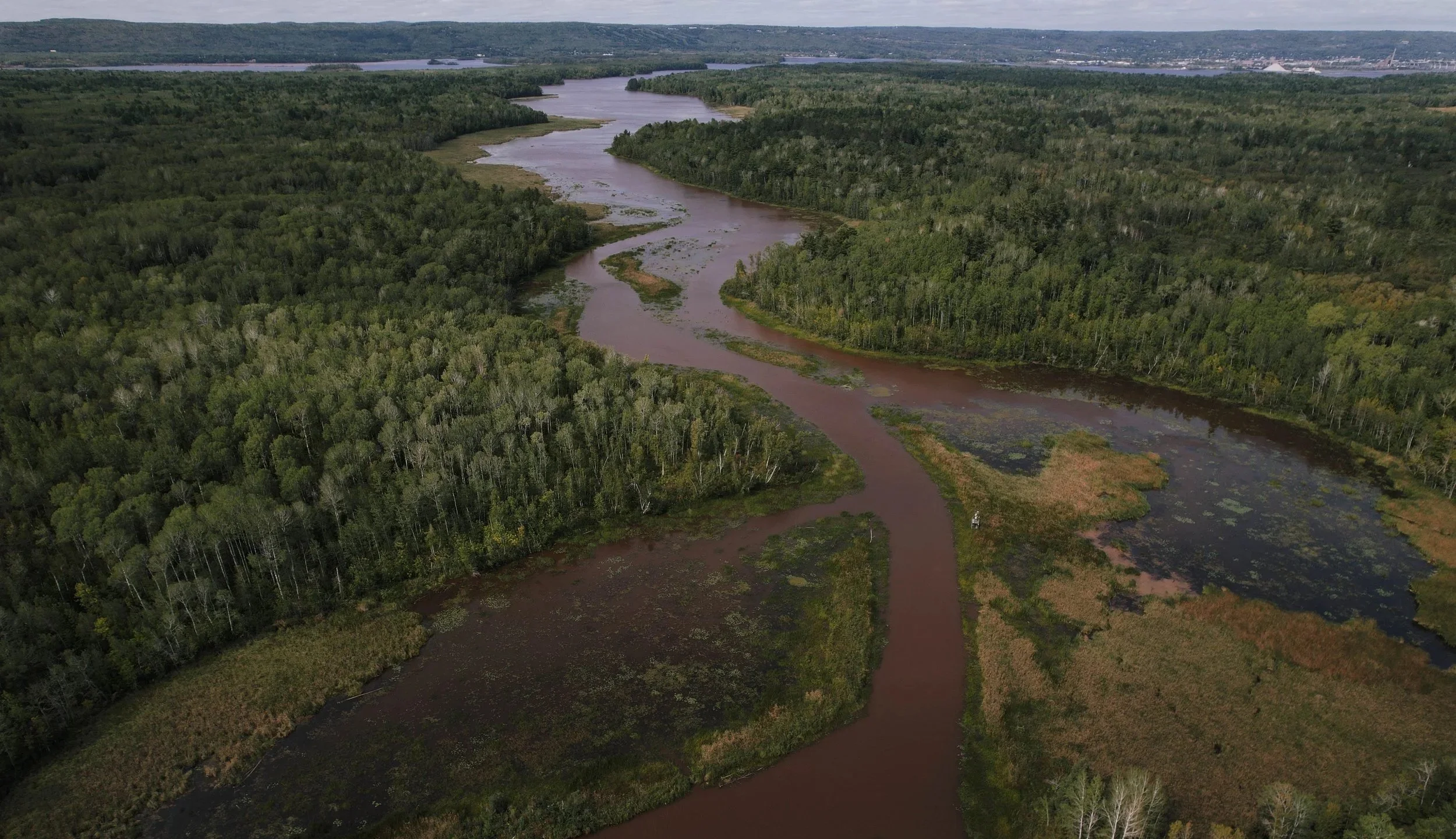
Photo: Pokegama Bay and Landing which lives within the Superior Municipal Forest in Superior, Wisconsin. Credit: Matthew Sperrazza
Natural History of the Lower St. Louis River
The lower St. Louis River is an exceptionally diverse and complex ecosystem shaped by geology, water, and time. Flowing through thick deposits of red clay, the river and its tributaries were flooded as Lake Superior water levels rose, forming a freshwater estuary with an irregular shoreline and bays at the mouths of tributaries.
The estuary contains important wetland communities found nowhere else in the world outside of the Great Lakes region.
A baymouth bar typical of estuary systems creates the protected waters of the harbor. The lakeside of the bar is primarily sand, while the landward side is composed of finer sediments. Together, the baymouth bar (Minnesota and Wisconsin Point) shields wetland habitats from the high-energy winds and waves of Lake Superior. Remnants of at least two older baymouth bars remain within the estuary, including Grassy Point, located about five miles from the river’s mouth. Grassy Point represents a baymouth bar formed during an earlier glacial lake stage, when water levels were at least three feet higher than today.
When first charted by William Herding in 1861, the St. Louis River estuary was relatively shallow and bordered by extensive wetlands and riparian forests. Surrounding upland forests of coniferous and mixed deciduous-coniferous stands slowed runoff by extending spring snowmelt, while thick organic duff on the forest floor further reduced water movement into the river. These conditions supported a wide range of fish, waterfowl, furbearers, and other wildlife for breeding and migration.
Since that time, riverside development has filled wetlands and open water areas, resulting in the loss of approximately 3,000 acres of shallow wetland habitat, while another 4,000 acres have been dredged or deepened for navigation. Despite these changes, the lower St. Louis River continues to provide critical habitat for fish reproduction, nesting colonial water birds and waterfowl, migratory shorebirds and songbirds, and many other species. The estuary supports a diverse warm-water fish community of approximately 54 species, including lake sturgeon, walleye, muskellunge, yellow perch, northern pike, burbot (eelpout), black crappie, emerald shiner, spottail shiner, and white sucker.